


Listeners:
Top listeners:
00:00
00:00
volume_up
chevron_left
-
 play_arrow
HCF-Radio
-
 play_arrow
London Calling Podcast Yana Bolder
music_note
The Origins of Carnival!
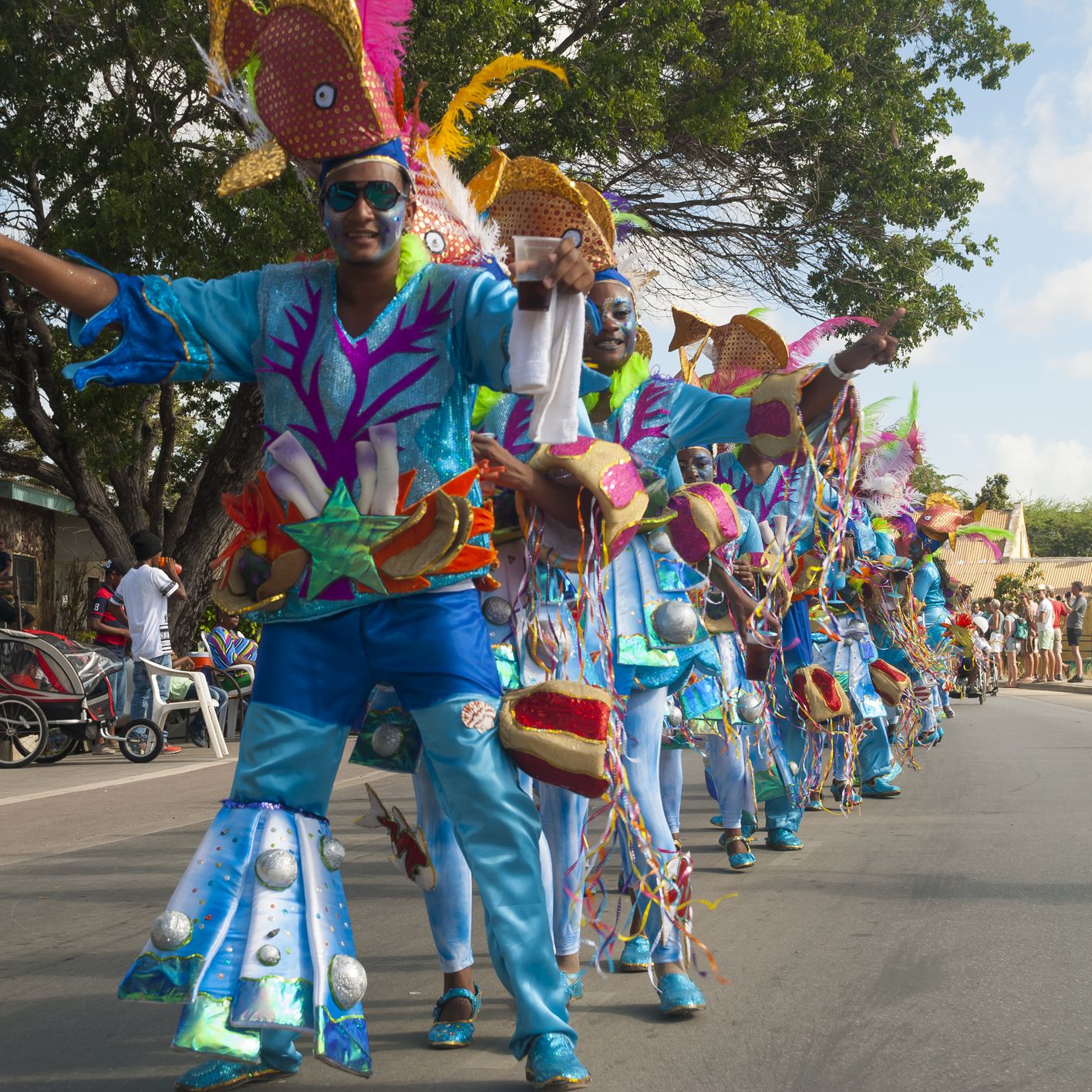
The origins of Trinidad Carnival
Trinidad Carnival dates back to the 18th century, and the influx of French Catholic planters – both white and free coloured – their slaves, and free blacks in the 1780s. The white and free coloured both staged elaborate masquerade balls at Christmas and as a “farewell to the flesh” before the Catholic Lenten season, with each group mimicking the other in their masking and entertainment. The West African slaves of these planters as well as free coloureds had their own masking traditions, and held festivities around the burning and harvesting of the sugar cane (this was known as cannes bruleés, anglicised as Canboulay or Camboulay). For each group, masks and mimicry were an essential part of the ritual.
Performers in the Canboulay Riots re-enactment on Carnival Friday morning. Photographer: Mark Lyndersay
After the emancipation of slaves in 1838, Canboulay became a symbol of freedom and defiance. In response, the British colonial government outlawed drumming, stickfighting, masquerading, African-derived religions (like those of the Orisa faith and the Spiritual Shouter Baptists or Shango Baptists), and even tried to suppress the steelpan – but was never able to stamp out what has become a hallmark of Trinidadian identity.
This masking and mimicry merged over time with the calinda – or stickfighting accompanied by chanting and drumming – and rituals of Canboulay to become a jamette – or underclass – masquerade. After many a battle with the British colonial government, who kept trying to ban drumming, masquerade, and even the steel pan – the festival eventually found a home on the Monday and Tuesday before Lent, and was adopted as a symbol of Trinidadian culture during the independence movement.
The origins of Trinidad Carnival
Trinidad Carnival dates back to the 18th century, and the influx of French Catholic planters – both white and free coloured – their slaves, and free blacks in the 1780s. The white and free coloured both staged elaborate masquerade balls at Christmas and as a “farewell to the flesh” before the Catholic Lenten season, with each group mimicking the other in their masking and entertainment. The West African slaves of these planters as well as free coloureds had their own masking traditions, and held festivities around the burning and harvesting of the sugar cane (this was known as cannes bruleés, anglicised as Canboulay or Camboulay). For each group, masks and mimicry were an essential part of the ritual.
Performers in the Canboulay Riots re-enactment on Carnival Friday morning. Photographer: Mark Lyndersay
After the emancipation of slaves in 1838, Canboulay became a symbol of freedom and defiance. In response, the British colonial government outlawed drumming, stickfighting, masquerading, African-derived religions (like those of the Orisa faith and the Spiritual Shouter Baptists or Shango Baptists), and even tried to suppress the steelpan – but was never able to stamp out what has become a hallmark of Trinidadian identity.
This masking and mimicry merged over time with the calinda – or stickfighting accompanied by chanting and drumming – and rituals of Canboulay to become a jamette – or underclass – masquerade. After many a battle with the British colonial government, who kept trying to ban drumming, masquerade, and even the steel pan – the festival eventually found a home on the Monday and Tuesday before Lent, and was adopted as a symbol of Trinidadian culture during the independence movement.
Characters from the earliest Carnival include the pis-en-lit, who walks around in a nightgown waving a chamber pot, and the Dame Lorraine, a man in a dress with enormously stuffed bosom and bottom. Some of these traditions have endured, but most of them are fading fast, replaced by the beads and feathers of Brazilianstyle costumes. But Carnival is driven by what the people want.
Businesses and the middle class have gentrified and popularised the festival over the last century, with formal competitions and committees taking some of the sting and violence out of the festival. There are still some sectors of society that consider Carnival as too lewd or morally unacceptable to participate or even spectate. Nevertheless, it has evolved into a festival celebrated (or avoided) by young and old, of every class, creed and colour, in what truly is a spectacle of creativity and resilience, and an exposition of all the nation’s strengths and weaknesses. It has evolved into one of international stature, and the signature event on Trinidad’s cultural calendar.
Soca legend Super Blue whips the crowd into a frenzy at QRC fete. Photo by Aaron Richards
© MEP Publishers | Trinidad Carnival: the birth & evolution | Discover Trinidad & Tobago https://www.discovertnt.com/articles/Trinidad/The-Birth-Evolution-of-Trinidad-Carnival/109/3/32/#ixzz6bteCvnvk
To reproduce an excerpt of this article, please ensure you include a link back (see above). For additional permissions/licensing, please contact us. Thanks!
Follow us: @meppublishers on Twitter | discovertnt on Facebook
Featured post
Latest posts
Current show
Fashion Victims
Every Afternoon With You!
For every Show page the timetable is auomatically generated from the schedule, and you can set automatic carousels of Podcasts, Articles and Charts by simply choosing a category. Curabitur id lacus felis. Sed justo mauris, auctor eget tellus nec, pellentesque varius mauris. Sed eu congue nulla, et tincidunt justo. Aliquam semper faucibus odio id varius. Suspendisse varius laoreet sodales.
closeUpcoming shows
Chart

-
-
 play_arrow
Sign Jeff Molina
-
-
-
 play_arrow
You Don't Know Me Dj Slim
-
-
-
 play_arrow
Neon N.O.R.M.A.
-
-













Post comments (0)